
Business
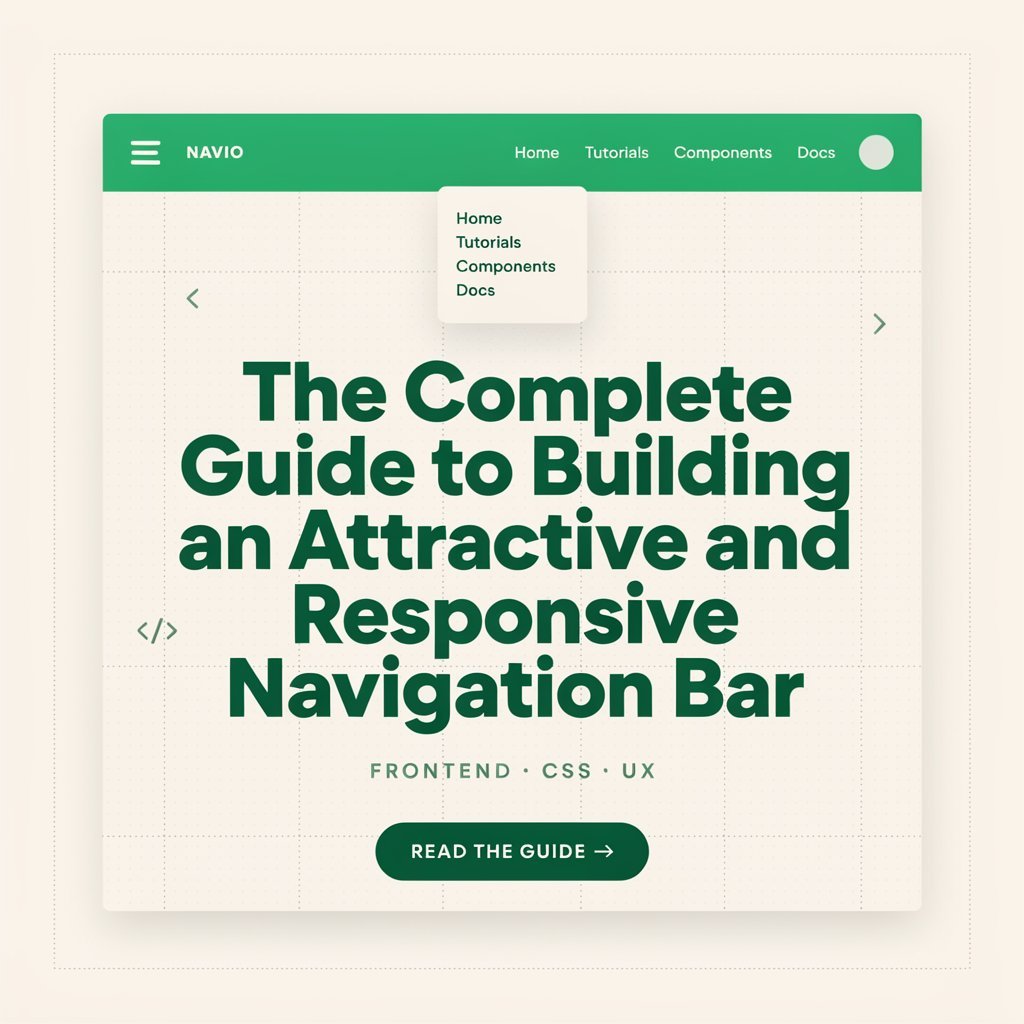
Green Navbar: The Complete Guide to Building an Attractive and Responsive Navigation Bar

Introduction
A navigation bar is one of the most important components of any website because it helps visitors move between pages quickly and efficiently. A well-designed navigation system improves user experience, increases engagement, and encourages visitors to explore more content. Among the many design styles available today, the Green Navbar has become increasingly popular because it represents freshness, growth, sustainability, nature, trust, and balance. Businesses, educational websites, healthcare organizations, environmental initiatives, agriculture companies, and personal portfolios often choose green as their primary navigation color to create a welcoming and professional appearance.
A Green Navbar is much more than simply changing the background color of a menu. It involves selecting the right shades of green, ensuring excellent readability, creating responsive layouts, improving accessibility, optimizing mobile navigation, and maintaining consistency throughout the website. In this comprehensive guide, you’ll learn everything about Green Navbars, including their benefits, design principles, responsive implementation, accessibility, SEO impact, common mistakes, and practical development tips.
What Is a Green Navbar?
A Green Navbar is a website navigation bar that primarily uses green shades for its background, buttons, borders, hover effects, or branding elements. It serves the same purpose as any navigation menu by helping users access important pages such as Home, About, Services, Blog, Contact, and Products. The difference lies in its visual identity, where green creates a calm, trustworthy, and environmentally friendly impression.
Green is associated with nature, health, innovation, sustainability, and financial success. Because of these positive associations, many modern websites use green navigation bars to strengthen their branding while maintaining a clean and attractive user interface.
Why Choose a Green Navbar?
Choosing a Green Navbar offers several advantages beyond aesthetics. Color psychology plays a significant role in how visitors perceive a website. Green often communicates reliability, growth, stability, and positivity, making it suitable for industries such as healthcare, education, agriculture, finance, technology, and environmental organizations.
A carefully designed Green Navbar also enhances visual hierarchy by clearly separating the navigation area from the rest of the webpage. When paired with sufficient contrast and readable typography, it improves usability and helps visitors locate important sections quickly.
Benefits of Using a Green Navigation Bar
A Green Navbar contributes to both visual appeal and functionality. It supports brand identity, creates a memorable first impression, and encourages user interaction through clear navigation. A responsive and well-organized navigation bar can also reduce bounce rates by helping visitors find information without frustration.
Other benefits include improved consistency across pages, stronger recognition of important menu items, better mobile navigation, and a modern appearance that reflects current web design trends.
Popular Shades of Green for Navigation Bars
Not every shade of green works equally well in website navigation. Dark forest green conveys professionalism and elegance, while emerald green creates a vibrant and premium appearance. Olive green provides a natural and earthy look, whereas mint green delivers a fresh and modern aesthetic. Lime green is energetic and youthful but should be used carefully because overly bright colors may reduce readability if not balanced with neutral backgrounds.
Selecting the right shade depends on your brand identity, target audience, and overall website theme. Combining green with white, charcoal, black, or soft gray often produces the best contrast and readability.
Essential Elements of a Great Green Navbar
An effective Green Navbar includes several key components that work together to create a smooth browsing experience. Clear menu labels, readable typography, consistent spacing, recognizable branding, responsive behavior, accessible keyboard navigation, and intuitive hover effects all contribute to a high-quality navigation system.
A search icon, call-to-action button, or user account menu can also be included when appropriate. However, the design should remain clean and uncluttered so users can quickly understand the available options.
How to Build a Green Navbar Using HTML and CSS
Creating a Green Navbar typically begins with semantic HTML that defines the navigation structure. CSS is then used to style the background, typography, spacing, hover effects, and responsive layout. Developers often use Flexbox or CSS Grid to align navigation items and ensure consistent spacing across different screen sizes.
For mobile devices, a collapsible menu or hamburger icon is commonly added with JavaScript to provide an intuitive navigation experience while preserving valuable screen space
Responsive Green Navbar Design
Modern websites must perform well on desktops, tablets, and smartphones. A responsive Green Navbar automatically adjusts its layout based on screen size, ensuring users can access menu items comfortably regardless of their device. Responsive techniques include flexible layouts, scalable typography, touch-friendly buttons, and collapsible menus that expand only when needed.
Testing the navigation across multiple browsers and screen sizes helps identify usability issues before a website is launched.
Accessibility Best Practices
Accessibility ensures that everyone, including users with disabilities, can navigate your website effectively. A Green Navbar should provide sufficient color contrast between text and background, support keyboard navigation, include visible focus indicators, and use descriptive labels for links and buttons.
Following accessibility standards not only improves user experience but also broadens your audience and demonstrates an inclusive approach to web design.
Green Navbar and SEO
Although a Green Navbar itself does not directly improve search rankings, a well-structured navigation system supports SEO by making it easier for search engines to crawl and understand your website. Clear internal linking helps distribute page authority, while intuitive navigation encourages visitors to spend more time exploring content, reducing bounce rates and improving engagement metrics.
Organized menus also help users discover valuable pages, increasing the likelihood of conversions and repeat visits.
Common Mistakes to Avoid
Some websites use green backgrounds that lack sufficient contrast with the text, making navigation difficult to read. Others overcrowd the navigation bar with too many menu items or rely on confusing dropdown structures. Inconsistent spacing, poor mobile responsiveness, and missing accessibility features can also negatively affect the user experience.
Keeping the navigation simple, readable, and responsive is the best way to ensure visitors can navigate effortlessly.
Best Practices for Designing a Green Navbar
Choose a green shade that aligns with your brand identity, maintain consistent spacing between menu items, use readable fonts, and ensure hover effects clearly indicate interactive elements. Optimize the navigation for touch devices, test performance on different browsers, and keep the menu structure logical and concise.
Regular usability testing can reveal opportunities to improve navigation efficiency and overall user satisfaction.
Future Trends in Green Navbar Design
Navigation design continues to evolve with advancements in web technologies. Minimalist layouts, subtle animations, glassmorphism, dark mode compatibility, sticky navigation bars, and AI-assisted personalization are becoming increasingly common. Green-themed navigation bars are also incorporating gradient backgrounds, smooth transitions, and micro-interactions to create engaging user experiences while maintaining fast performance and accessibility.
Conclusion
A Green Navbar is an excellent choice for websites seeking a clean, professional, and visually appealing navigation system. Beyond its attractive appearance, a well-designed navigation bar enhances usability, supports accessibility, strengthens branding, and contributes to better overall website performance. By selecting appropriate shades of green, following responsive design principles, prioritizing accessibility, and maintaining a logical menu structure, developers can create navigation systems that serve both users and search engines effectively. Whether you’re building a personal portfolio, a corporate website, an online store, or an educational platform, investing time in designing a thoughtful Green Navbar can significantly improve the overall browsing experience.
Frequently Asked Questions (FAQs)
1. What is a Green Navbar?
A Green Navbar is a website navigation bar that uses green as its primary design color while providing links to important sections of a website.
2. Why should I use a Green Navbar?
Green symbolizes trust, growth, sustainability, and freshness, making it an excellent choice for many modern websites.
3. Is a Green Navbar responsive?
It can be. A responsive Green Navbar automatically adapts to desktops, tablets, and smartphones for an optimal user experience.
4. Which industries commonly use Green Navbars?
Healthcare, education, agriculture, finance, technology, environmental organizations, nonprofits, and wellness brands frequently use green navigation bars.
5. Does a Green Navbar improve SEO?
The color itself does not affect SEO, but a clear, well-structured navigation system helps search engines crawl your site and improves user experience.
6. Which technologies are used to create a Green Navbar?
Most Green Navbars are built using HTML, CSS, and JavaScript. Modern frameworks such as Bootstrap, Tailwind CSS, and React can also be used.
7. What is the best text color for a Green Navbar?
White or very light gray text usually provides excellent contrast against darker green backgrounds.
8. How can I make my Green Navbar mobile-friendly?
Use responsive layouts, flexible spacing, a collapsible hamburger menu, and touch-friendly navigation elements.
9. What are the most popular green shades for navigation bars?
Forest green, emerald green, olive green, mint green, sage green, and dark green are among the most popular choices.
10. Can a Green Navbar be used for eCommerce websites?
Yes. A Green Navbar works well for online stores, especially those focused on eco-friendly products, health, gardening, food, finance, or sustainable brands, while also fitting many other business types when aligned with the overall brand identity.

Introduction
The world is experiencing an unprecedented wave of urbanization. By the middle of this century, nearly 70% of the global population will live in cities. This immense shift presents a formidable challenge: how can we design urban environments that are not only functional and efficient but also sustainable, equitable, and deeply human? The answer may lie in a new, forward-thinking movement known as Axurbain . This concept is redefining our relationship with city life, moving beyond traditional urban planning to create vibrant ecosystems where innovative design, environmental stewardship, and community well-being converge.
Axurbain is more than just a buzzword; it represents a holistic philosophy that integrates modern architecture, smart technology, and sustainable practices to build cities that prioritize people and the planet . It stands as a response to the growing problems of congestion, pollution, and social disconnect that plague many metropolises. By exploring the core principles of Axurbain, we can understand its profound impact on everything from residential communities to public spaces, and discover a promising blueprint for the cities of tomorrow.
What is Axurbain? Understanding the Core Concept
At its heart, the concept of Axurbain can be understood as a vision for a “future-ready” city . The name itself, a portmanteau often linked to “architecture,” “urban,” and “sustainability,” encapsulates its mission to blend human-centric design with ecological consciousness . It is a framework that challenges the conventional “concrete jungle” image of cities, promoting instead a vision of urban spaces as living, breathing ecosystems where technology and nature coexist to enhance the quality of life .
Unlike traditional urban planning that often prioritizes traffic flow and commercial zones, Axurbain puts people at the center of the design process. This human-centered approach asks fundamental questions: Is this street walkable? Is this park accessible? Does this building save energy and contribute to the community’s vibrancy? It moves beyond aesthetics to focus on the full experience of city life, including emotional comfort, social connection, and environmental responsibility . The idea is to create seamless connections among people, nature, and technology, making cities more livable, resilient, and inspiring for all residents.
The Key Principles of Axurbain: Design for a Better Tomorrow
These core pillars ensure that urban development is not just about constructing buildings, but about crafting a better society.
Sustainability and Green Infrastructure
Sustainability is arguably the most critical element of Axurbain. This goes far beyond adding a few trees to a sidewalk. It involves a comprehensive approach to eco-friendly living, integrating green infrastructure into every facet of the cityscape . This includes the use of energy-efficient building designs with passive heating and cooling, the installation of green roofs and vertical gardens to combat the urban heat island effect, and the widespread adoption of renewable energy sources like solar and wind power .
The goal is to reduce the city’s carbon footprint while creating healthier environments for residents. For instance, sustainable materials such as bamboo and recycled wood are used in construction, and waste management systems are reimagined to minimize landfill use . This principle ensures that cities can grow and thrive without depleting the resources of future generations.
Smart and Responsive Technology
In the age of digital transformation, technology plays a pivotal role in the Axurbain vision. Smart cities are not just about having high-speed internet; they are about using technology as the backbone of an efficient and responsive urban environment . This means leveraging the Internet of Things (IoT), sensors, and data analytics to manage city services more effectively.
Practical examples include traffic sensors that adjust traffic lights to reduce congestion, smart waste bins that alert collectors only when they are full, and building automation systems that optimize energy use . However, the Axurbain approach to technology is always mindful of the human element. It aims to make city life more convenient and less stressful, ensuring that digital tools serve people’s needs without making daily life feel cold or overly complex .
Community, Walkability, and Human-Centric Design
Perhaps the most distinguishing feature of Axurbain is its relentless focus on community and human experience. This is achieved through the creation of vibrant public spaces—parks, plazas, and pedestrian-friendly streets that serve as the “living rooms” of the city .
Key design elements include wider sidewalks, safe crosswalks, and abundant seating areas to encourage walking and social interaction. The concept of “mixed-use” development is central here, where residential, commercial, and leisure spaces are integrated to create neighborhoods where people can live, work, and play without relying heavily on cars . This approach not only reduces traffic but also supports local economies and strengthens community bonds .
Real-World Applications: Successful Axurbain Projects
The principles of Axurbain are not merely theoretical; they are being successfully implemented in cities around the world, showcasing the tangible benefits of this innovative design philosophy.
The High Line, New York City
A quintessential example of urban renewal, the High Line is an elevated linear park built on a disused railway track. This project perfectly embodies the Axurbain principle of adaptive reuse, transforming an industrial relic into a vibrant green space that attracts millions of visitors and fosters community interaction . It demonstrates how innovative design can inject new life into a neighborhood, spurring economic and cultural development.
Barcelona’s Superblocks
In Barcelona, the city has taken a bold step to reclaim streets from cars and give them back to people. The “superblocks” initiative restricts traffic within a grid of streets, turning them into pedestrian-friendly zones filled with seating, playgrounds, and green spaces . This project directly addresses the “15-minute city” concept, making amenities more accessible and dramatically improving the quality of life for residents by reducing noise and pollution.
Singapore’s Gardens by the Bay
Singapore’s Gardens by the Bay is a stellar example of how technology and nature can fuse to create awe-inspiring urban environments. Its iconic Supertree structures are not just visually striking; they serve as vertical gardens that collect rainwater and generate solar power .
The Impact and Future of Axurbain in Urban Environments
The adoption of Axurbain principles has a profound and wide-ranging impact on urban life. By prioritizing walkability and public spaces, it encourages healthier lifestyles and improves public health outcomes . The integration of nature, such as trees and water features, has also been shown to reduce stress and improve mental well-being for residents. Environmentally, cities that adopt these strategies see significant reductions in their carbon footprints through energy-efficient buildings and sustainable transport systems .
Despite its immense potential, the movement is not without its challenges. Critics often point to the high initial costs of integrating sustainable materials and advanced technologies, which can make Axurbain projects less accessible for lower-income communities . Ensuring genuine community engagement in the planning process can also be difficult, as can navigating complex regulatory hurdles . However, as more success stories emerge and the demand for inclusive, sustainable public spaces grows, the adoption of Axurbain is expected to accelerate globally . Its vision of balanced, resilient, and vibrant cities offers a compelling path forward for a rapidly urbanizing world.
Conclusion
Axurbain is not just a trend in architecture or city planning; it is a fundamental shift in how we think about and build our urban environments. By moving beyond a focus on mere functionality, it offers a holistic vision for creating cities that are sustainable, technologically integrated, and deeply rooted in community and human well-being . The movement embraces a future where city living is synonymous with clean air, safe and walkable streets, accessible green spaces, and a strong sense of social connection.
As cities worldwide grapple with the pressures of climate change, population growth, and social inequality, the principles of Axurbain provide a vital and actionable blueprint for a better tomorrow. The challenge lies in scaling these ideas, overcoming financial and bureaucratic hurdles, and ensuring that the benefits of this human-centered design are shared by all. The future of our cities depends on embracing such transformative visions—moving from concrete jungles to vibrant, sustainable, and inclusive ecosystems where both people and nature can thrive for generations to come.
Frequently Asked Questions (FAQ)
What is the main goal of Axurbain?
The primary goal of Axurbain is to redesign urban spaces to be more sustainable, livable, and human-centric. It aims to create cities that integrate technology and nature to improve the quality of life for all residents, moving away from the traditional model of congested, polluted cities .
How does Axurbain use technology to improve cities?
Axurbain uses smart technology, such as IoT sensors and data analytics, to improve city efficiency. This includes systems for real-time traffic management, smart waste collection, energy-efficient building automation, and providing data to help city planners make better decisions .
What are some examples of Axurbain projects?
Successful examples include the High Line in New York City (an elevated park), Barcelona’s “superblocks” (car-free, pedestrian-centric zones), and Singapore’s Gardens by the Bay (a tech-integrated nature park) .
What challenges does the Axurbain movement face?
The movement faces challenges such as the high initial cost of sustainable materials and technologies, which can lead to concerns about affordability for low-income communities. There are also challenges in ensuring genuine community participation in planning and navigating existing government regulations .
How does Axurbain promote sustainability in urban design?
Axurbain promotes sustainability by integrating green infrastructure into city planning. This includes using energy-efficient buildings, installing green roofs and vertical gardens, relying on renewable energy sources, and promoting sustainable materials in construction .
Introduction
In the fast-paced world of modern manufacturing, the ability to innovate rapidly while controlling costs is the key differentiator between market leaders and those who fall behind. For decades, the industry has been constrained by traditional mold-making methods that are notoriously time-consuming, labor-intensive, and prohibitively expensive. These conventional processes, which rely heavily on manual tooling and subtractive manufacturing, often create significant bottlenecks in product development cycles, stifling innovation and delaying time-to-market. However, a revolutionary force is reshaping this landscape: RepMold. This comprehensive guide delves deep into the world of RepMold, exploring how this advanced technology is redefining the standards of speed, precision, and sustainability in manufacturing.
What is RepMold? A Simple Explanation of the Technology
At its core, RepMold represents a fundamental paradigm shift in mold manufacturing, moving away from the constraints of traditional methods toward a flexible, digital-first approach. It is an advanced manufacturing methodology that leverages cutting-edge technologies like computer-aided design (CAD), 3D printing (additive manufacturing), and automation to create high-precision molds quickly and cost-effectively. Think of RepMold as a bridge between the old world of manufacturing and the new. It retains the durability and reliability of traditional molds but introduces a level of flexibility, speed, and precision that was previously unattainable with conventional techniques. Instead of relying on manual sculpting or weeks of complex machining, RepMold uses a digital workflow. A designer creates a detailed blueprint of the desired mold using CAD software, which is then used to drive automated or semi-automated processes to produce the physical tool. This can involve 3D printing the mold layer by layer, a process known as additive manufacturing, or combining additive and subtractive techniques in what is called hybrid manufacturing.
The Core Technologies That Make RepMold Work
The power of RepMold lies in its seamless integration of several breakthrough technologies that work in concert to revolutionize the manufacturing process. At the heart of the system is sophisticated CAD software, which allows engineers and designers to create intricate and highly detailed digital models of the mold. This digital blueprint is the single source of truth for the entire process, ensuring that every detail is captured and can be precisely replicated. The digital design is then brought to life using advanced manufacturing techniques, most notably 3D printing. This additive manufacturing process builds molds layer by layer, enabling the creation of complex geometries—such as intricate internal channels and undercuts—that are almost impossible to achieve with traditional, subtractive machining. A key advantage of this layer-by-layer construction is the dramatic reduction in material waste; you are building only what you need rather than cutting away from a block of material. Finally, automation plays a vital role in ensuring consistency and efficiency. Robotic arms and automated quality control systems can monitor and adjust the manufacturing process in real-time, reducing the potential for human error and guaranteeing that each mold meets rigorous quality standards. This integration of digital design, additive manufacturing, and automation is what makes RepMold a powerful and reliable solution for modern manufacturing challenges.
The RepMold Process: From Concept to Production
Understanding the step-by-step process of RepMold helps to appreciate its efficiency and the value it brings to product development. The journey from a concept to a functional mold is streamlined into a series of well-defined stages that prioritize speed and precision. The process begins with the conceptual design and creation of a digital model using advanced CAD software, ensuring every intricate detail of the desired part is captured. Before any physical production begins, the digital mold is rigorously tested using sophisticated simulation tools. This step is critical, as it predicts potential issues like stress points, material flow problems, or cooling inefficiencies, allowing designers to address them virtually and avoid costly mistakes in the physical world. Once the design is validated, a rapid prototype of the mold is produced, often using 3D printing. This prototype can be tested and physically evaluated, and any necessary adjustments are made quickly and inexpensively—a luxury that traditional methods cannot afford. With the design finalized, the final mold is produced using high-performance materials chosen for their specific application, whether it’s durability, heat resistance, or compatibility with the product material. The final production uses precision machining, automated assembly, or hybrid manufacturing to faithfully recreate the digital model. The finished mold then undergoes a final, strict quality control process to ensure it meets all specifications and is ready for production use.
RepMold vs. Traditional Molding: A Direct Comparison
To truly understand the impact of RepMold, it is essential to directly compare it to traditional injection molding, the conventional industry standard. The most glaring differences are in lead time and cost. Traditional manufacturing is a slow and expensive process, with lead times of 8 to 16 weeks and initial tooling costs ranging from $15,000 to over $100,000. In stark contrast, RepMold can produce a functional mold in just 3 to 10 days with a tooling cost between $500 and $10,000. This dramatic reduction in both time and upfront investment fundamentally changes the economics of product development. Furthermore, traditional methods punish design changes with staggering costs of $5,000 to $50,000 per modification, as any alteration requires significant rework on the expensive tooling. RepMold, however, is inherently flexible; a design change often simply requires a new mold to be produced at a fraction of the cost, making iteration economically viable. This flexibility translates to minimum order quantities; traditional molding only becomes economical for high-volume runs of 1,000 to 10,000+ units, whereas RepMold is highly cost-effective for small batches of 10 to 500 units.
The Transformative Benefits of Using RepMold
The advantages of adopting RepMold technology are profound, offering tangible business benefits that directly impact a company’s bottom line and competitive positioning.
Dramatically Reduced Time to Market
In industries where being first matters, RepMold provides an unparalleled advantage. The ability to move from concept to market-ready product in weeks rather than months accelerates development cycles and allows companies to launch products while competitors are still waiting for their traditional tooling. This speed is not just a convenience; it is a strategic imperative in sectors like consumer electronics, medical devices, and automotive accessories.
Unprecedented Cost Efficiency
RepMold fundamentally alters the financial risk associated with new product development. Traditional tooling’s high upfront costs create enormous pressure to “get it right the first time,” often leading to conservative designs and missed opportunities. With RepMold‘s cost-effective mold-making, the financial risk of testing bold ideas or responding to customer feedback drops dramatically. Multiple design iterations become feasible within budgets that wouldn’t cover a single traditional mold. This not only fosters innovation but also allows companies to validate their designs in the real world before committing to the substantial expense of high-volume production tooling, saving significant capital and reducing waste.
Superior Precision and Customization
RepMold is not just about speed; it is about achieving a level of precision that was previously difficult to attain. The digital workflow, driven by CAD and automated manufacturing, ensures a level of accuracy and consistency that manual processes cannot match. This precision translates into higher reliability in downstream manufacturing and reduced material waste. Furthermore, the technology enables a high degree of customization. RepMold excels at creating complex geometries and intricate designs, allowing manufacturers to produce highly detailed components that meet exact specifications. This capability is particularly valuable for industries with stringent tolerances, such as aerospace and medical device manufacturing, and for creating prototypes that are functional representations of the final product.
Enhanced Sustainability
Modern manufacturing is under increasing pressure to adopt sustainable practices, and RepMold rises to meet this challenge. By utilizing additive manufacturing and efficient digital workflows, RepMold significantly cuts down on material waste, a common issue with traditional subtractive methods that often generate large amounts of scrap. The process is also more energy-efficient, leading to lower carbon emissions and a smaller overall environmental footprint. Many materials used in the RepMold process are recyclable or can be repurposed, promoting a circular economy. For companies looking to enhance their green credentials and meet sustainability goals, RepMold offers a compelling and environmentally responsible alternative.
Diverse Industry Applications of RepMold
The versatility of RepMold makes it an invaluable tool across a wide range of industries, each benefiting from its unique capabilities. The technology’s ability to produce complex, high-precision components quickly and cost-effectively makes it a preferred choice for manufacturers seeking a competitive edge.
Automotive Manufacturing: RepMold is used to produce lightweight, high-strength components that meet strict safety standards while reducing production costs and lead times. It allows for rapid prototyping of new parts and facilitates design changes based on rigorous testing.
Aerospace: The aerospace industry demands components with complex geometries and high precision, often using advanced materials. RepMold’s ability to create detailed, customized parts with minimal tooling makes it an ideal solution.
Electronics and Consumer Goods: In these sectors, where rapid product cycles and miniaturization are key, RepMold enables the creation of compact, precise components quickly. It allows companies to prototype and test new designs, dramatically reducing market reaction times and shortening product development cycles.
Medical Devices: The medical field leverages RepMold for creating accurate, biocompatible components that are critical for patient safety and clinical success. The technology’s precision is essential for meeting stringent regulatory requirements while producing complex products.
Success Stories: Companies Using RepMold
The theoretical benefits of RepMold are validated by the real-world successes of companies that have integrated it into their workflows. These examples demonstrate the technology’s profound impact on efficiency, productivity, and quality across various sectors. For instance, a prominent automotive parts company utilized RepMold technology to build intricate components with exceptional accuracy, successfully cutting down both their production time and material waste. In another case, a consumer electronics company adopted RepMold during the prototyping stage and experienced significantly shortened product development cycles, enabling them to bring new products to market much faster than their competitors. Perhaps one of the most compelling applications is in the medical device industry, where a company demonstrated how RepMold allowed them to satisfy stringent regulatory requirements while producing complex, high-quality parts with minimal material use.
The Impact of RepMold and Its Potential for Growth
The impact of RepMold on the mold-making industry is profound and its potential for future growth is immense. By leveraging advanced technology, it directly addresses the limitations of traditional methods, paving the way for unprecedented efficiency and precision. Companies that have adopted RepMold are experiencing shorter lead times, reduced costs, and the ability to bring higher-quality products to market faster. As industries continue to seek faster production cycles and higher quality outputs, RepMold stands out as a game-changer that enhances product designs and boosts competitiveness in an ever-evolving market. Looking ahead, RepMold is poised for significant expansion. With ongoing research and development, there is potential for even more breakthroughs in mold making processes. As businesses increasingly recognize these advantages, we can anticipate a widespread shift toward smarter manufacturing practices centered around solutions like RepMold.
Conclusion
RepMold represents a paradigm shift in the world of manufacturing, offering a powerful fusion of technological innovation, precision, and sustainability. By streamlining production processes, enhancing material versatility, and supporting rapid prototyping, the technology empowers businesses to accelerate innovation while maintaining high standards of quality. It provides a clear and direct solution to the age-old problems of high costs, long lead times, and inflexible design changes that have long plagued the industry. For manufacturers, the message is clear: the future of mold-making is digital, fast, and cost-effective.
Frequently Asked Questions (FAQ)
1. What exactly is RepMold?
RepMold is a modern approach to mold manufacturing that combines digital design (CAD), additive manufacturing (like 3D printing), and automation to create precision molds faster and more cost-effectively than traditional methods. It is ideal for rapid prototyping, bridge tooling, and low-to-medium volume production.
2. How does RepMold compare to traditional injection molding in terms of cost?
Traditional injection molding requires a substantial upfront investment, typically costing between $15,000 and over $100,000 for tooling, with lead times of 8-16 weeks. In contrast, RepMold tooling can cost between $500 and $10,000 and be produced in just 3-10 days, making it significantly more affordable for product development and small production runsass=””>.
3. What are the main benefits of using RepMold?
The primary benefits include a dramatic reduction in time to market, significantly lower upfront costs, the ability to make design changes easily and affordably, and a higher degree of precision and customization. It also contributes to sustainability by reducing material waste and energy consumption.
4. Which industries can benefit most from RepMold technology?
RepMold is highly versatile and benefits a wide range of industries, including automotive, aerospace, consumer electronics, medical devices, and consumer goods. Any sector that requires high-precision, custom parts or rapid product development cycles can leverage this technology.
5. Is RepMold suitable for high-volume mass production?
While RepMold excels at rapid prototyping and lower-volume production, it is not typically the most economical choice for extremely high-volume runs (e.g., millions of parts). Traditional steel molds, while costly and slow to produce, are more durable for high-volume needs. However, RepMold is often used as a “bridge” solution to start production while a final, high-volume mold is being manufactured.

Aluminum Fence Installation: A Complete Step-by-Step Guide

Tang Math Equation Answers: A Complete Guide to Solving Problems Step by Step

Eskute C100-BK-SS: Complete Guide, Features, Design and Buying Tips

Basket Random Unblocked: The Ultimate Guide to the Chaotic Basketball Game Everyone Loves in 2026

EzClasswork: A Complete Guide to Understanding the Online Learning Platform, Features, Benefits, and Educational Impact

Queen’s Feast Charlotte Restaurant Week: A Complete Guide for Food Lovers
 game3 months ago
Basket Random Unblocked: The Ultimate Guide to the Chaotic Basketball Game Everyone Loves in 2026
- game3 months ago
EzClasswork: A Complete Guide to Understanding the Online Learning Platform, Features, Benefits, and Educational Impact
- food3 months ago
Queen’s Feast Charlotte Restaurant Week: A Complete Guide for Food Lovers
- Entertainment3 months ago
Antonimar Mello: The Private Life Behind a Public Spotlight
- game3 months ago
GunSpin: The Ultimate Guide to the Addictive Physics-Based Shooting Game (2026)
- game3 months ago
Pixel Speedrun: The Ultimate Guide to Understanding, Playing, and Mastering the Fast-Paced Pixel Challenge
- Business3 months ago
Stormuring Explained: Meaning, Origins, Applications, and Why It Matters
- Fashion3 months ago
Dojen Moe: Meaning, Origins, and Why the Internet Is Talking About It in 2026